
Article: The Perfect Walk Starts with the Right Harness
The Perfect Walk Starts with the Right Harness
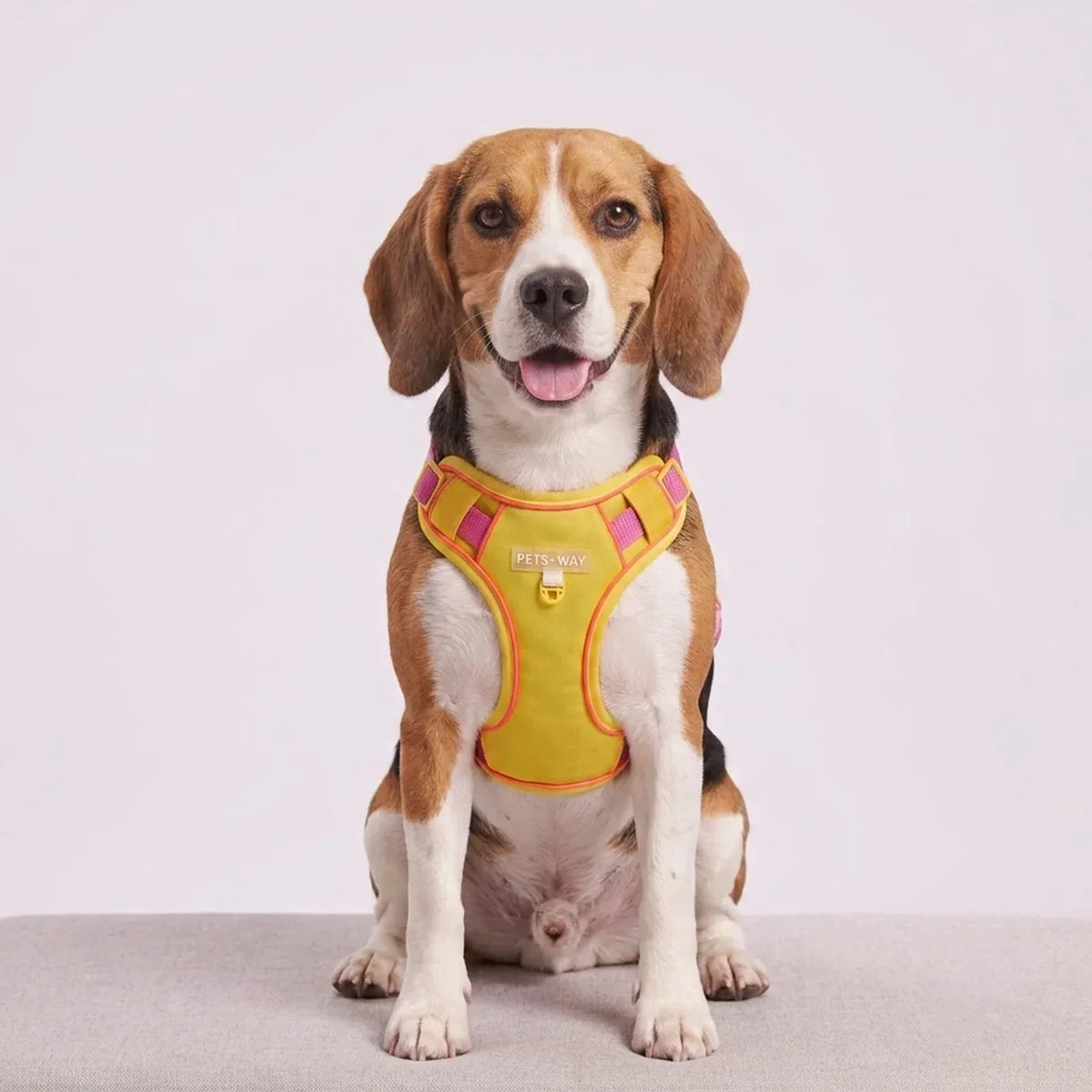
Most dogs don't dislike walks — they dislike the harness getting in the way of them. Get the gear right, and the walk becomes what it's actually supposed to be: new smells, a little freedom, and unhurried time with their favourite person. Here's what actually separates a harness your dog tolerates from one they forget they're even wearing.
Start With the Right Fit
Fit comes first, before colour, before price, before anything else. A harness should feel secure without feeling restrictive, staying put as your dog walks, turns, sits and explores, rather than sliding around with every step they take.
Skip the breed-based guessing. Two dogs of the same breed can carry completely different chest depths, shoulder widths and body shapes, and the AKC's own Harness Guide makes the same point: measure your own dog instead of trusting a label built around some breed "average." Once the harness is actually on, there's one test that tells you whether you got it right: slide two fingers flat under any strap. Can't manage that? It's too tight. Room for your whole hand? Too loose. A harness with several adjustment points, like the adjustable straps of Urban Trail Harness across the chest and back, makes hitting that exact gap easy, instead of forcing you to compromise between "secure" and "comfortable" every single time. Check the fit properly once, early on, and you'll rarely need to think about it again — and it's worth rechecking after a groomer visit or a growth spurt, since a dog's shape can shift more than owners expect.
Comfort Should Come First
A harness worn daily has to earn its keep, day after day, walk after walk. The usual trouble spots are the armpits and the top of the shoulders, where a stiff seam or a rough cut edge rubs raw with every stride, so soft, padded construction matters most exactly there — not just anywhere convenient on the harness. The Full Body Cloud-Fit Harness, sized for smaller breeds, is a good example of that: airmesh padding sits on both sides of the front chest panel, right where the rubbing actually happens, while the back stays open-weave for airflow instead of adding bulk where it isn't needed.
Heat matters too. A harness that traps warmth against the body can turn a simple ten-minute walk into a dog who's panting hard, lagging a step behind, and pulling toward the nearest patch of shade. Breathable fabric keeps the walk about the walk, not about getting it over with as fast as possible, and it's usually the difference between a dog who trots out happily and one who hesitates at the door.
Think About Your Walking Routine
A quick loop around the block asks less of a harness than a long, muddy trail does — and a calm walker asks less of it than a dog who lunges at every squirrel and passer-by. For that second kind of dog, the RSPCA (https://rspcapetinsurance.org.au/pet-talk/how-to-choose-the-right-dog-harness/) notes that front-clip designs can help redirect a pull rather than fight against it — though a well-fitted, properly adjustable back-clip harness, paired with the training approach further down this post, works just as well for most dogs who are still learning not to pull.
Think honestly about which kind of walk you actually do most, on most days, not the one you occasionally imagine taking, and choose gear built around that real routine rather than whichever option simply looked good on the shelf. Buying for the walk you wish you took, instead of the one you actually do, is usually where the mismatch starts.
Introduce It Positively
Picture a dog sniffing a brand-new harness for the first time, ears back, sitting a little further away than usual. That's completely normal. Nothing is wrong with your dog, and nothing is wrong with the harness.
Let them approach it on their own terms first, with no pressure to put it on straight away. A few short, calm practice sessions indoors, treats scattered near it, go a long way before the harness ever meets the outside world. Positive reinforcement — what the AKC describes as rewarding the behaviour you want rather than correcting the one you don't — turns that early hesitation into curiosity fast, whether that's a treat, genuine praise, or whatever actually lands with your dog. Once the harness gets linked to something they already love, like the front door opening, it stops being a thing they merely tolerate and starts being part of the excitement itself.
The Best Harness Is the One Your Dog Can Forget
Watch for the moment your dog simply stops noticing it's there: no scratching, no shaking, no pausing mid-walk to paw at a strap that's rubbing somewhere it shouldn't. That's it. That's the whole test, and the AKC (https://www.akc.org/expert-advice/training/improve-your-dogs-walk/) notes that a little variety in your route tends to keep a dog engaged for even longer once the gear itself stops being the problem.
At Petsway, that's what we build toward — comfort, confidence and everyday style, because a good walk shouldn't need a second thought from either end of the leash.


