

Article: Why Your Dog Sleeps So Much (And When to Worry)
Why Your Dog Sleeps So Much (And When to Worry)
If you've ever caught your dog snoozing at 11 AM and wondered whether something's wrong, relax — it's probably completely normal, since dogs sleep a lot more than humans do. Understanding their sleep patterns can tell you a great deal about their health, mood and overall well-being.
How Much Sleep Is Normal?
Most adult dogs sleep between 10 and 12 hours a day, though this varies depending on breed, age and activity level. The AKC notes that dogs typically spend around half of each day asleep, with another 30% spent awake but relaxed, and only about 20% genuinely active.
Puppies, who burn enormous amounts of energy exploring the world, can sleep up to 18–20 hours a day, since growth itself is tiring work for a young body. Senior dogs tend to sleep even more than adults, often needing extra rest as their joints and energy levels naturally slow down.
Why Sleep Matters So Much
Sleep isn't just downtime for dogs; it's when their bodies repair muscle, consolidate memory, and regulate mood.
A dog that isn't sleeping well can become irritable, anxious or unusually clingy, much the way a sleep-deprived person might, and poor sleep can be an early indicator (a sign that something needs attention before it becomes serious) of underlying issues like joint pain, anxiety or digestive discomfort.
Signs Your Dog Isn't Sleeping Well
- Restlessness or frequent repositioning at night
- Excessive panting while at rest
- Waking up disoriented or startled easily
- Increased daytime drowsiness paired with nighttime alertness
- Reluctance to settle into their usual sleeping spot
Building a Better Sleep Routine
- Keep a consistent schedule. Dogs, like people, thrive on routine, so feeding, walks and bedtime at roughly the same time each day help regulate their internal clock.
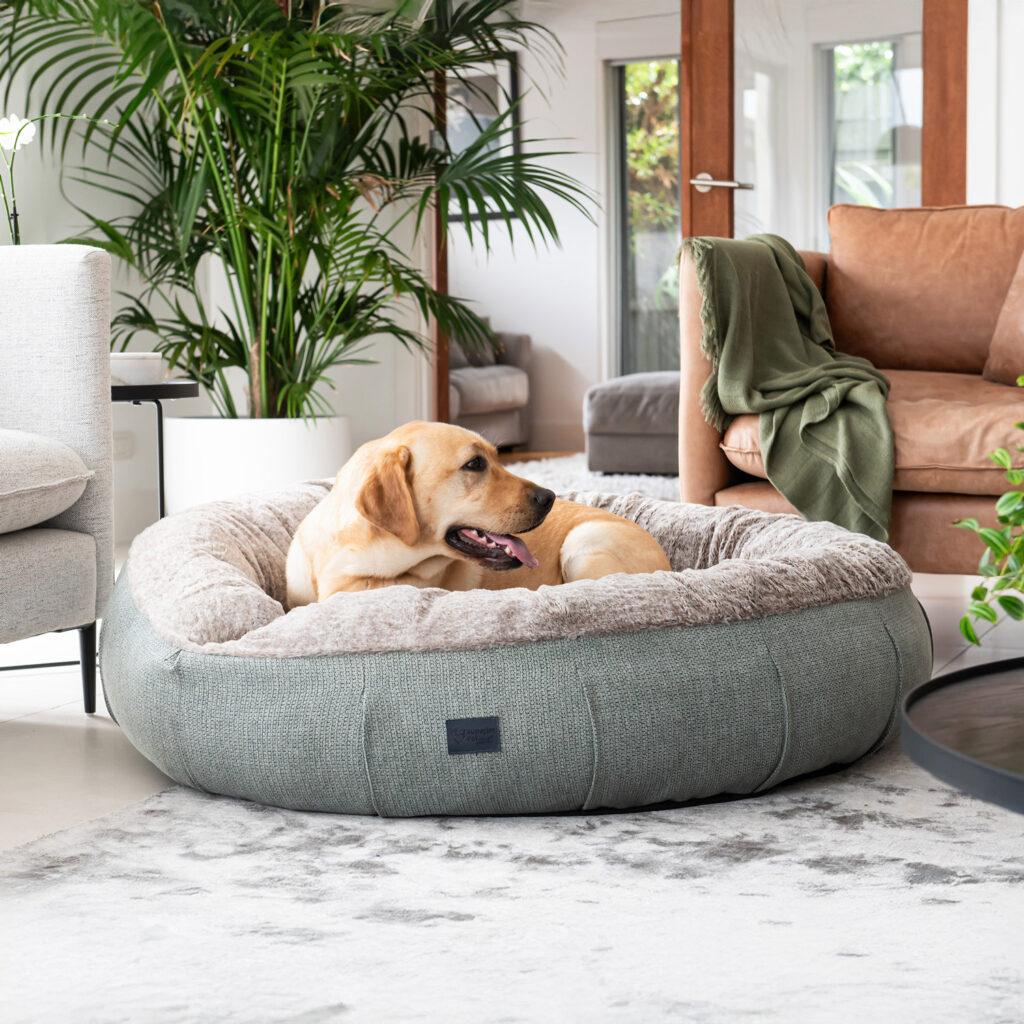
- Create a dedicated sleep space. A quiet corner with a supportive bed tells your dog "this is where rest happens" — avoid high-traffic areas or spots near loud appliances.
- Watch the temperature. Dogs overheat more easily than we do, especially in summer, so a cool, well-ventilated sleeping area makes a real difference to sleep quality.
- Limit late-evening stimulation. A calm wind-down — a short walk, a quiet cuddle — works far better than an exciting play session right before bed.
- Choose the right bedding. A bed that supports their joints and body shape prevents the tossing and turning that disrupts deep sleep. The Spring - Papaya Dog Bed is built with this in mind: its microfiber filling holds its shape under regular use rather than flattening out over time, so the support it offers on day one is closer to the support it still offers months later.
When to See a Vet
If your dog suddenly sleeps significantly more or less than usual, or shows signs of discomfort while resting, it's worth a vet visit. Sudden changes are rarely random — they're usually your dog's way of communicating that something feels off.
At the end of the day, good sleep is one of the simplest, most powerful things you can give your dog. A well-rested pup is a happier, healthier, more playful companion, and honestly, watching them sleep peacefully is one of the quiet joys of being a dog parent.
At Petsway, a good bed is where that rest starts — everything else on this list is a habit, but the right bed is doing its job every single night.


