



Article: Why Do Dogs Eat Grass? Myth vs. Science
Why Do Dogs Eat Grass? Myth vs. Science
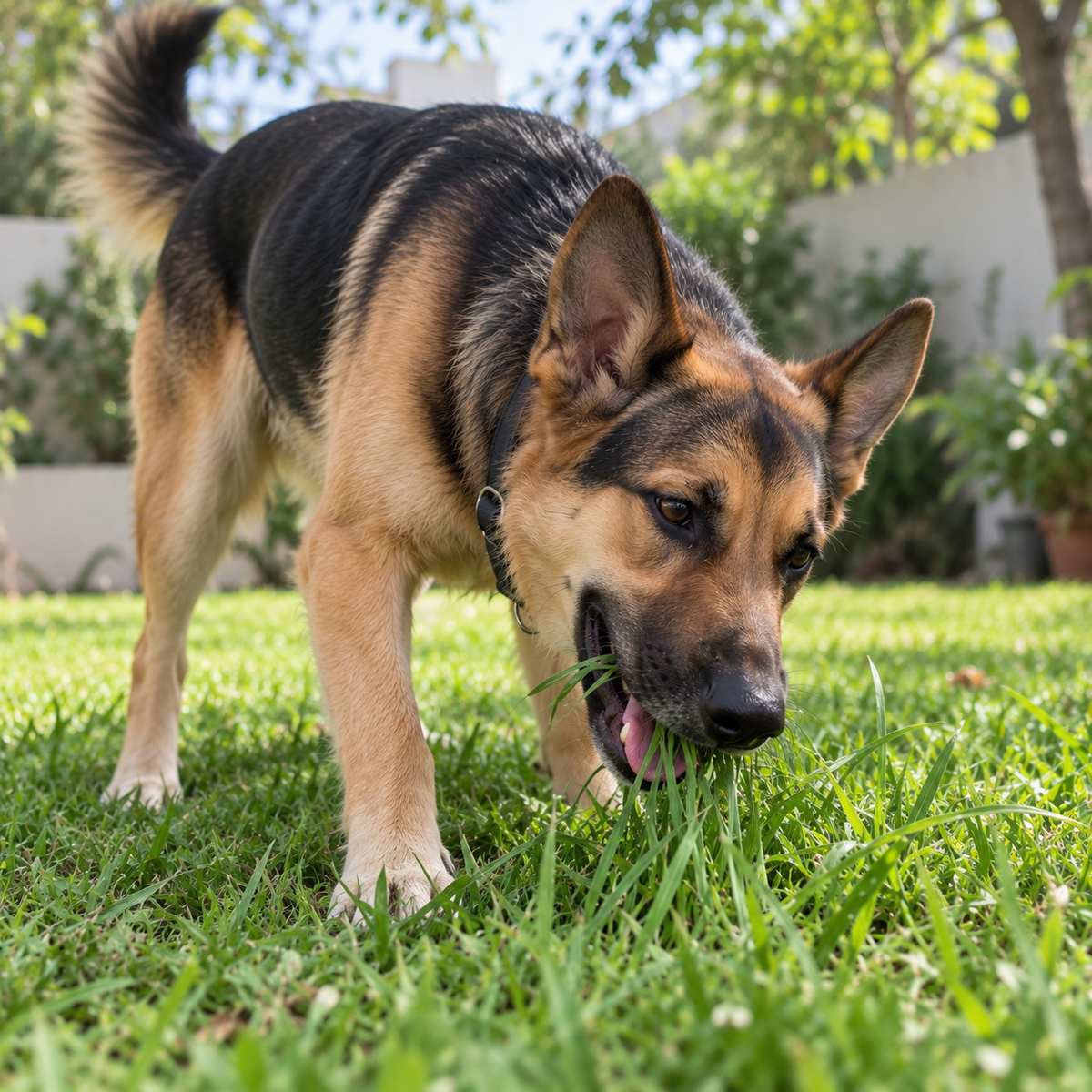
Watch your dog drop everything mid-walk to gnaw on a patch of grass, and the instinct is to assume something's wrong. In the vast majority of cases, nothing is — grass-eating is one of the most ordinary things a dog can do, and the real explanation has less to do with sick stomachs and more with instinct, boredom, and a habit that's older than domestication itself.
The Vomiting Myth, Busted
The most common assumption is that dogs eat grass to make themselves throw up and feel better. The numbers don't back it up. According to VCA Hospitals, fewer than 25% of dogs actually vomit after eating grass, and only about 10% show any sign of illness beforehand — so for the vast majority of dogs, grazing isn't preceded by sickness or followed by relief.
A 2008 study published in Applied Animal Behaviour Science, reported by LiveScience, found the same pattern: dogs that already seemed unwell before eating grass were somewhat more likely to vomit afterward, but grass-eating itself rarely triggered vomiting in otherwise healthy dogs. In other words, sick dogs occasionally eat grass and then vomit — but healthy dogs eating grass almost never do.
It Might Just Be the Fiber
If it's not about vomiting, what's the actual physical pull? One theory points to fibre. Grass supplies roughage that supports digestion, and a genuinely compelling piece of evidence for this comes from a 2007 case study in the Journal of Veterinary Medical Science: an 11-year-old Miniature Poodle with a seven-year history of eating grass and vomiting daily stopped the behaviour entirely within days of being switched to a high-fibre commercial diet, as PetMD describes.
That's a single case, not proof every grass-eating dog is fibre-deficient — most dogs on a well-balanced diet aren't short on fibre at all — but it does show the drive can be genuinely nutritional for some dogs, not just habitual.
An Old Wolf Habit
There's also a strong instinctive thread here. Wolf stool samples show plant material present in anywhere from 11% to 47% of samples, though when scientists look at actual stomach contents rather than droppings, plant matter typically makes up only 2–10% of the volume, according to research cited by PetMD.
Wild canids ate their prey whole, stomach contents included, which were often full of half-digested plant matter — so grass-grazing may be a vestigial habit (a trait or behaviour that persists in a reduced, less purposeful form from an earlier stage of evolution), left over from an era when dogs didn't get to choose their fibre intake from a bag of kibble.
Boredom, Not Just Biology
Instinct doesn't explain everything, though — timing matters too. A study tracking 12 dogs across 709 recorded grass-eating events, covered by ScienceAlert, found dogs were most likely to graze before their daily meal and less likely to afterward, with grazing tapering off later in the day.
That pattern lines up with boredom and appetite more than illness — a dog with nothing to do and an empty stomach is simply more likely to start nibbling. Some dogs also learn that eating grass gets a reaction out of their owner, whether that's a treat offered as a distraction or just extra attention, which can turn an occasional habit into a reliably repeated one.
The Real Risk Isn't the Grass
Grass itself is almost never the problem. What's on it is. Lawns treated with pesticides or fertiliser can make a dog seriously ill, and grass contaminated with another animal's faecal matter can carry intestinal parasites like roundworms or hookworms, or in unvaccinated dogs, something as serious as parvovirus.
Swallowing large amounts quickly, without chewing, can also occasionally lead to a blockage — rare, but worth knowing about if your dog eats grass with real urgency rather than casual nibbling.
When to Actually Worry
Occasional, calm grazing in a healthy dog isn't something to intervene on — trying to train it out entirely may do more harm than good, since it's working against a fairly natural impulse. What's worth a vet visit instead:
- Frantic, urgent grass-eating rather than casual nibbling
- Grass-eating paired with repeated vomiting, diarrhoea, or lethargy
- A sudden new habit in a dog that never grazed before
- Any signs of stomach discomfort before the grazing starts, which can point to something like gastric reflux or pancreatitis rather than ordinary behaviour
If You Want Them to Stop Anyway
- Keep them on a monthly dewormer and away from lawns you can't verify are pesticide-free
- If boredom looks like the driver, a food puzzle toy or a longer daily walk often cuts the habit down on its own
- If you want to actively redirect it, carry treats on walks and interrupt the behaviour with a command or a trick the moment they lean in for a bite, rewarding the redirect rather than the grazing itself
Grass-eating is closer to a dog's version of a habit than a medical event — instinct, a little boredom, sometimes genuine fibre-seeking, and only rarely a sign that something's actually wrong. The grass isn't the danger. What's been sprayed on it, or left behind on it, usually is.


